The functional protein additives can be administered orally, and effectively enhance the survival of cultured shrimp by alleviating the infections of major shrimp pathogens like shrimp white spot syndrome virus (WSSV).
- Oral administration through mixing with feed
- Effectively improves the survival rate

Functional protein additive focus on WSSV
Applications :
Innocreate Bioscience® Inno A1 Shrimp Feed Additive alleviates the infection of shrimp pathogens in the gastrointestinal tract for effective prevention and control of major shrimp diseases like WSSV.
Advantages :
Innocreate Bioscience® Inno A1 Shrimp Feed Additive is purely protein preparation without chemicals or antibiotics. It can be orally administered as feed additives. The product will not leave residues in shrimps.
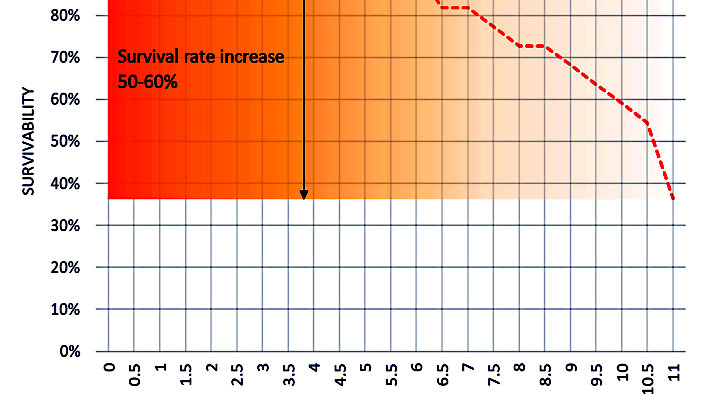
Experiments showed that usage of the product increases survival rate of cultured shrimps by 50-60% in a WSSV-challenged environment.
Administration of Inno A1 –
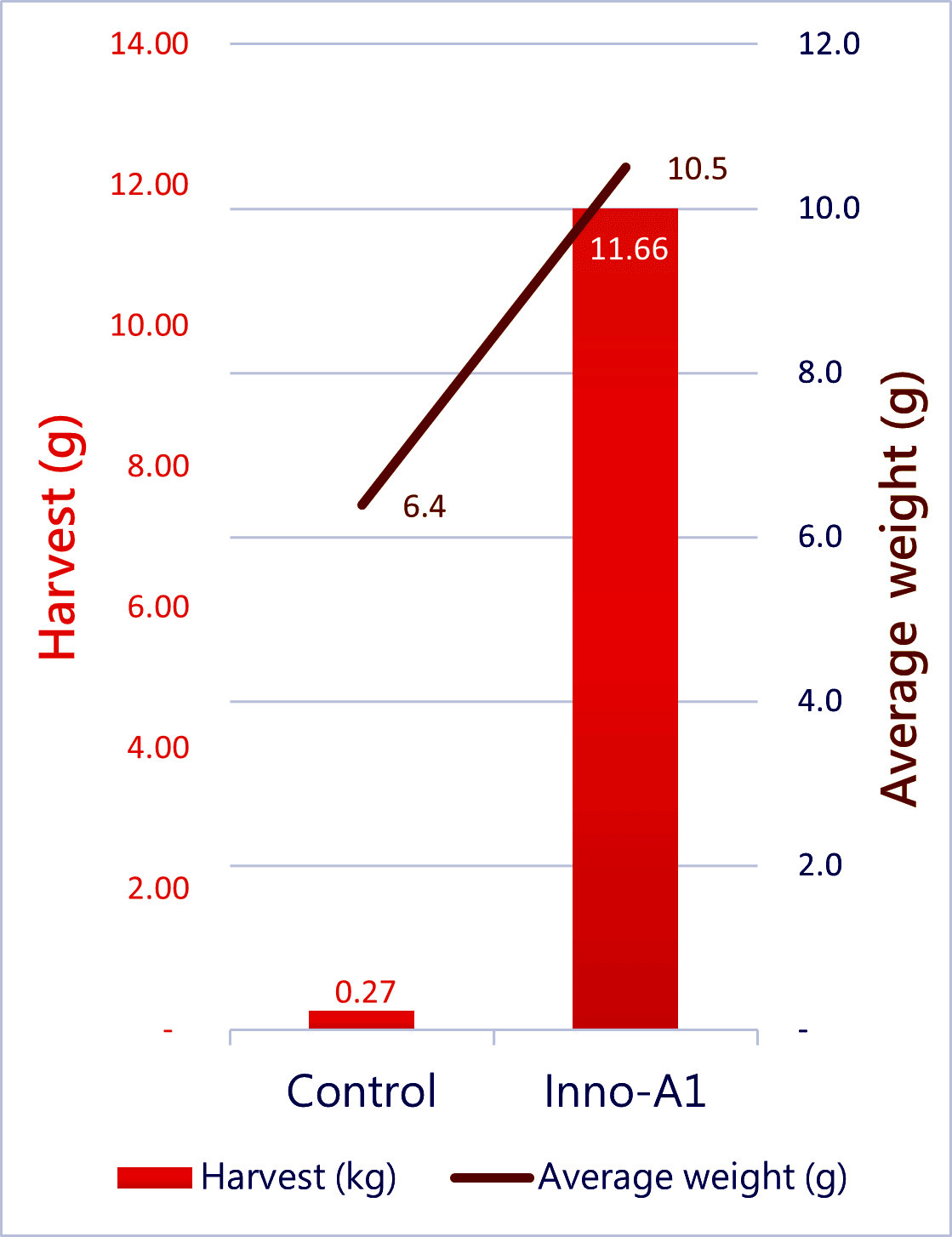
containing feed increases shrimp production and survival rates – Field test
In the first pond (B group), a few shrimp tested positive for AHPND V. parahaemolyticus, non-AHPND V. parahaemolyticus, and WSSV. Moreover, Enterocytozoon hepatopenaei (EHP) was detected in the majority of the samples. (Common situation in the field.)
These B-group shrimp were divided into group Control and Inno-A1 (2,000 shrimp each), fed with commercial feed and Inno A1-containing feed, respectively. After six weeks, far fewer surviving shrimp were observed in the Control group than in the Inno-A1 group (2.15% vs. 55.55% respectively). This low survival rate was similar to ponds in the same area reported by many shrimp farmers.
The average body length and weight of the Inno-A1 group shrimp were also higher than those in the Control group. Among the harvested shrimp, a large proportion exhibited EHP in both the Inno-A1 and Control groups, non-AHPND V. parahaemolyticus was detected in only one sample in the Control group but not in the Inno-A1 group. Moreover, WSSV and AHPND V. parahaemolyticus were not detected in either group.
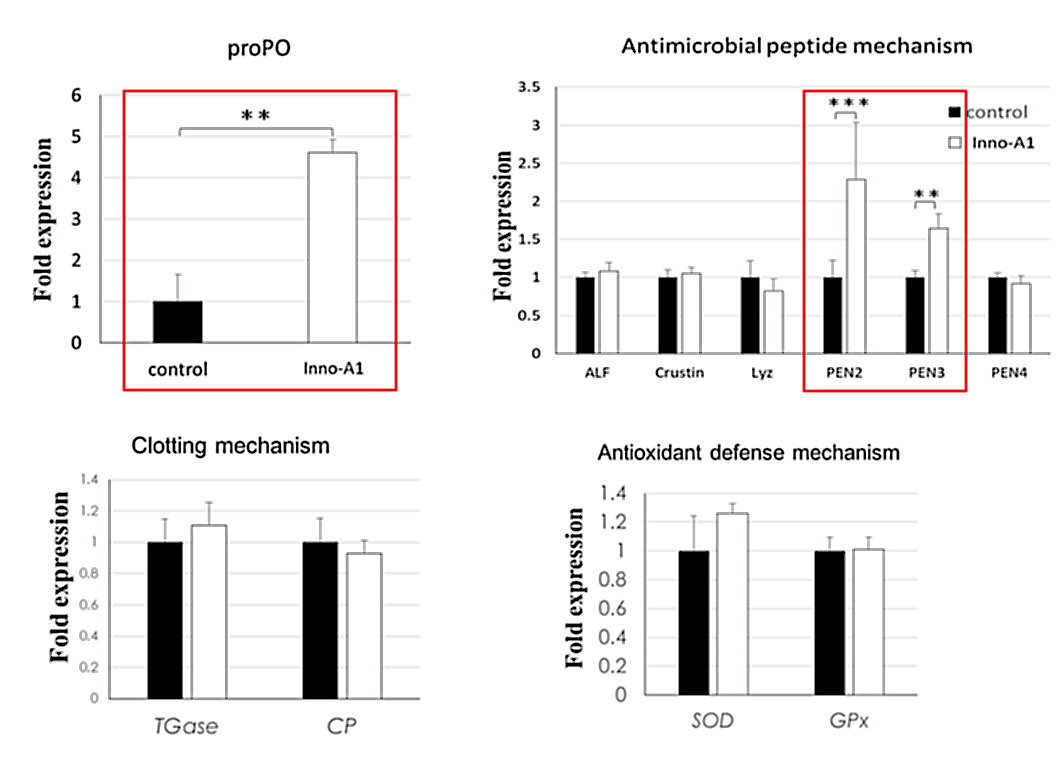
Inno-A1 can induce the expression of immune-related genes in shrimp
The Prophenoloxidase (proPO) gene of the proPO activating system, which is considered a major innate defense system of shrimp, was up-regulated in the Inno-A1 group compared to the Control group.
Antimicrobial peptides (AMPs) also constitute the first line of defense against pathogens in shrimp, and several AMP genes such as penaeidin 2 (PEN2) and penaeidin 3 (PEN3) were up-regulated in the Inno-A1 group compared to the Control group.
Effects of Inno A1 dietary supplementation on the intestinal microbiome of shrimp
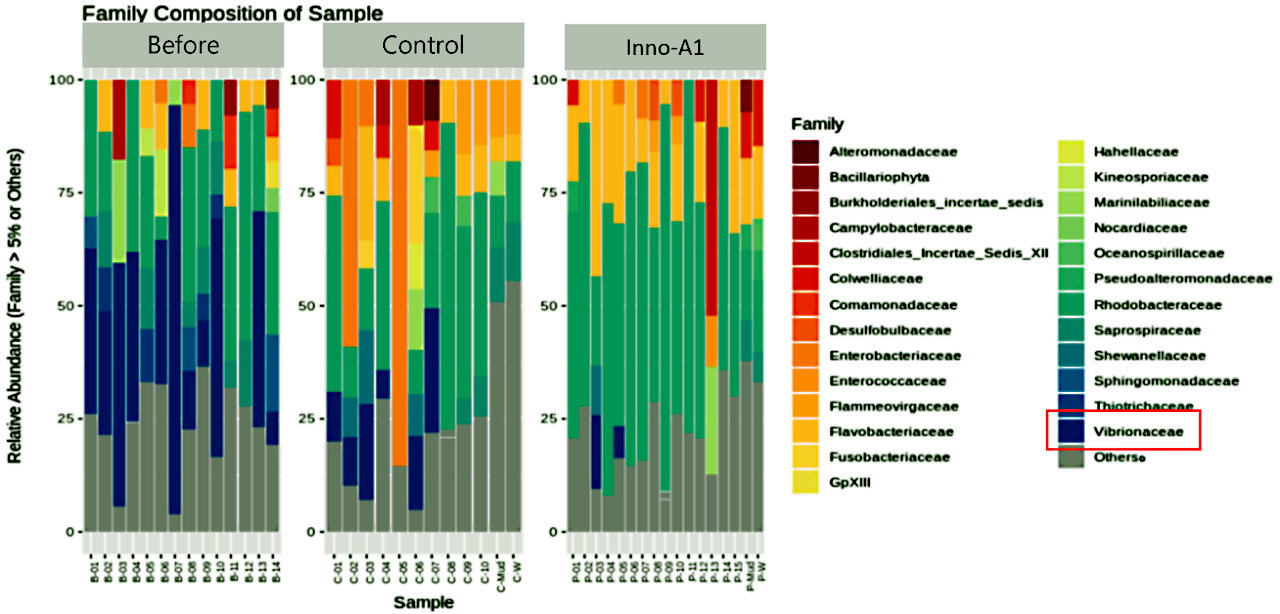
The Before group exhibited a lower microbial diversity, and Vibrionaceae was the dominant intestinal microbial taxon in the group. Vibrionaceae, classified under Vibrionales in Gammaproteobacteria, is a severe pathogen for shrimp. Therefore, the shrimps in the Control group were weak and even dead. Six weeks after the experiment started, the Vibrionaceae still occurred in the gut of the Control group but decreased significantly in the gut of the Inno-A1 group (reduced by 166.5 fold).